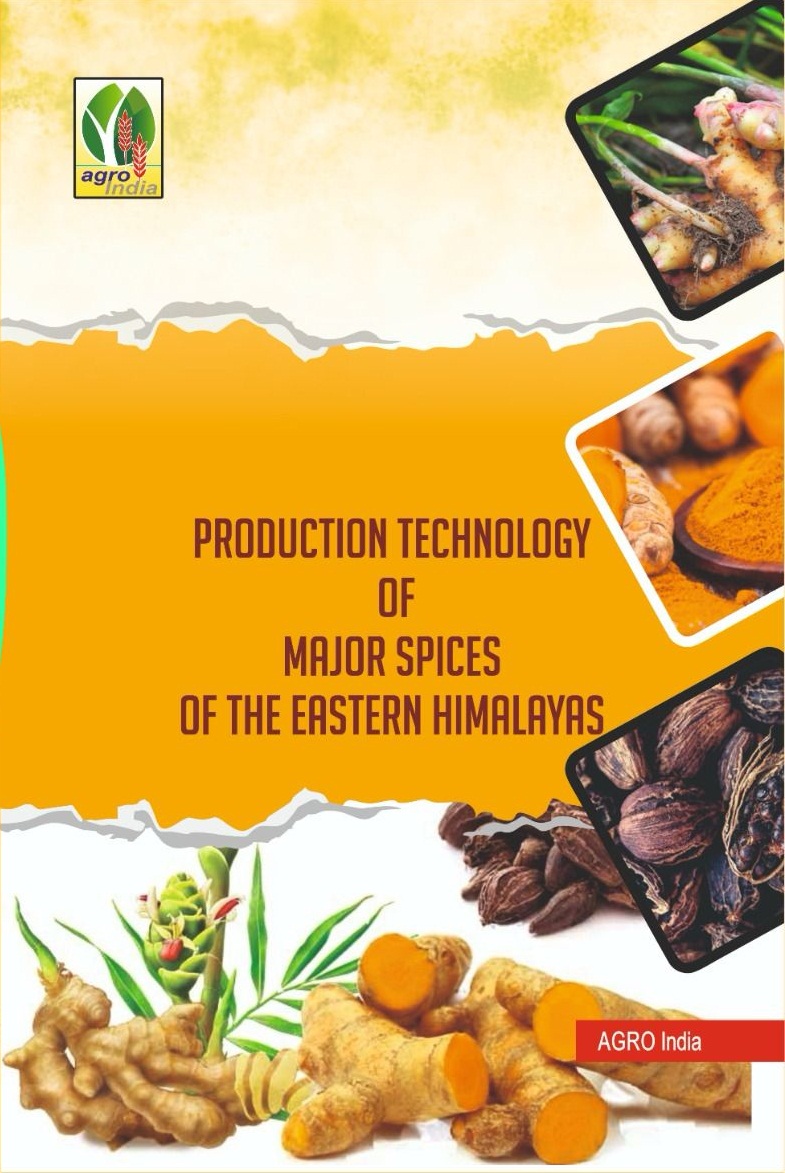
Production Technology of Major Spices of the Eastern Himalayas
Spices have held a special place in Indian agriculture, culture, and trade for centuries. India, often celebrated as the “land of spices,” continues to be the largest producer, consumer, and exporter of a wide variety of spices. Among these, ginger, turmeric, and large cardamom occupy a unique position due to their culinary, medicinal, and economic significance. These crops not only enrich the flavor of food but also contribute substantially to rural livelihoods, income generation, and the national economy.
The Eastern Himalayas, with its unique agro-climatic conditions, fertile soils, abundant rainfall, and rich biodiversity, is particularly well-suited for cultivating high-value spices. The region is home to numerous tribal and indigenous communities who have nurtured traditional cultivation practices, passed down over generations. Large cardamom from Sikkim and Arunachal Pradesh, Lakadong turmeric from Meghalaya, and ginger from Arunachal Pradesh are examples of premium spices that have gained recognition in domestic and international markets for their distinctive quality, aroma, and medicinal properties.
This book, “Spice Crops of the Eastern Himalayas: Cultivation of Ginger, Turmeric, and Large Cardamom”, aims to provide a comprehensive and practical guide for all stakeholders in the spice sector. It bridges the gap between traditional knowledge and modern scientific approaches, combining agronomic practices, post-harvest technology, value addition, market trends, policy frameworks, and socio-economic perspectives. The content is structured to serve farmers, agripreneurs, and cooperatives seeking practical guidance, as well as students, researchers, and policymakers who require a deeper understanding of the spice ecosystem in the Eastern Himalayas.
The book covers a wide spectrum of topics, including crop-specific cultivation techniques, soil and climate requirements, propagation, planting, nutrient management, pest and disease management, harvesting, processing, storage, quality standards, and value-added products
The vision for 2050 presented in the book outlines a roadmap for transforming the Eastern Himalayas into a hub for high-value spices, ensuring economic prosperity, environmental sustainability, and global recognition.
We hope that it will serve as avaluable resource for enhancing productivity, improving quality, fostering entrepreneurship, and promoting sustainable developmentin the spice sector.
We extend our gratitude to all farmers, researchers, policymakers, and institutions whose knowledge and experiences have contributed to this book.